History and Medieval Studies

Soviet Soft Power in Poland

October 14, 2015

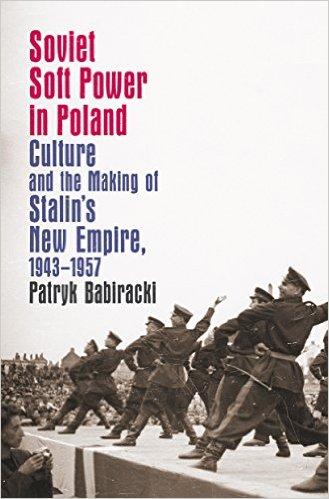
A new book by IAS CEU Fellow Patryk Babiracki, Soviet Soft Power in Poland. Culture and the Making of Stalin's New Empire, 1943-1957, has been published by The University of North Carolina Press.

Dissection, Discipline and Urban Transformation: Anatomy in Late Imperial Vienna

Type: 
Seminar
Building: 
Nador u. 9, Monument Building
Room: 
Gellner Room
Date: 
December 9, 2015 - 11:30am to 1:00pm

Vienna in the last decades of the Habsburg rule is generally imagined as home to a leisurely café culture and a lively art scene, but also as a polyglot time bomb of class and ethnic conflict. For historians of medicine, the city was a leading educational center, offering students and physicians unparalleled access to the bodies of patients, living and dead. How and why should we try to put these two views together?

A Different 1956 - 80 Years of Yiddish Theater in Romania

Type: 
Seminar
Building: 
Nador u. 9, Monument Building
Room: 
Gellner Room
Date: 
November 25, 2015 - 11:30am to 1:00pm

Officially sanctioned as a state institution in 1948 under the name Teatrul Evreiesc de Stat Bucureşti (TES), Yiddish theater had a much longer history in Romania and could trace its roots all the way to Abraham Goldfaden, by all accounts the father of Yiddish theater. However, the theater had to turn 80 before it could officially celebrate an anniversary. This lecture will put the theater’s anniversary in the context of both the TES’s existence as a state institution and Jewish life in general under Romania’s socialist regime.

Ilya Ehrenburg, the Peace Movement and the Crisis of 1956

Type: 
Seminar
Building: 
Nador u. 9, Monument Building
Room: 
Gellner Room
Date: 
November 11, 2015 - 11:30am to 1:00pm

As a leading figure of the postwar communist peace movement, Ilya Ehrenburg was reviled as Stalin’s stooge in the cold war cultural contest with the west. Behind the scenes, however, Ehrenburg was trying to loosen Moscow’s grip on the World Peace Council and make the movement more diverse and independent. These efforts culminated in Ehrenburg’s resistance to Moscow’s directives during the 1956 Hungarian crisis. To avoid a split in the peace movement Ehrenburg brokered a resolution that blamed the crisis on the cold war and stopped short of endorsing Soviet military intervention in Hungary.

Samizdat

July 16, 2015

Between Justice and Stability: The Politics of War Crimes Prosecutions in Post-Miloševic Serbia

July 14, 2015

Fashion and the Consumer Revolution in Contemporary Russia

July 14, 2015

Book by IAS CEU Fellow, Olga Gurova, entitled "Fashion and the Consumer Revolution in Contemporary Russia" published by Routledge.

Samizdat

July 14, 2015

Pages

Subscribe to RSS - History and Medieval Studies